


Most people arrive in Santorini expecting white sand. They get the opposite, and the surprise is usually a good one. The island’s shoreline runs dark, from charcoal grey to near black, and the colour is not a trick of the light. It is the direct result of the volcano that built the island. If you are searching for a black sand beach in Santorini, the real question is not whether you will find one. It is which of the six you should spend your day on, because they differ more than the photos suggest.
Why Is the Sand Black in Santorini?
The short answer: the sand is black because it is ground-up volcanic rock, not crushed shell and coral.
Santorini sits on an active volcano. The Minoan eruption of roughly 1600 BCE tore the centre out of the island and left the caldera you see from Fira and Oia today. That eruption, and the ones before and after it, buried the island in basalt and other dark volcanic rock.
The sea has been breaking that rock down ever since. Waves grind basalt into coarse grains and smooth pebbles, and those grains stay dark because the parent rock is dark. White sand forms differently, from eroded shell, coral and quartz. Santorini has very little of any of them.
That is also why the sand feels different underfoot. Volcanic grains are heavier and coarser than the fine white sand of a Caribbean beach, and they hold heat far better.

Are All Beaches in Santorini Black Sand?
No, and this is where a lot of trip planning goes wrong.
The dark beaches sit on the south and east coasts. The caldera side, where Fira, Firostefani and Oia look out over the water, has almost no beach at all. It is a cliff.
Three other things are worth knowing before you plan:
- Not every dark beach is sandy. Some are pebbled, and the difference matters if you plan to walk barefoot or bring small children.
- Red Beach near Akrotiri is not black. Its iron-rich cliffs give it a rust-red colour that can look rose-tinted in soft light. Travellers searching for pink sand are usually thinking of this beach.
- The colour varies. Vlychada reads grey, Perissa reads closer to true black, and Kamari sits somewhere between the two.
The Black Sand Beaches of Santorini, One by One
Perissa
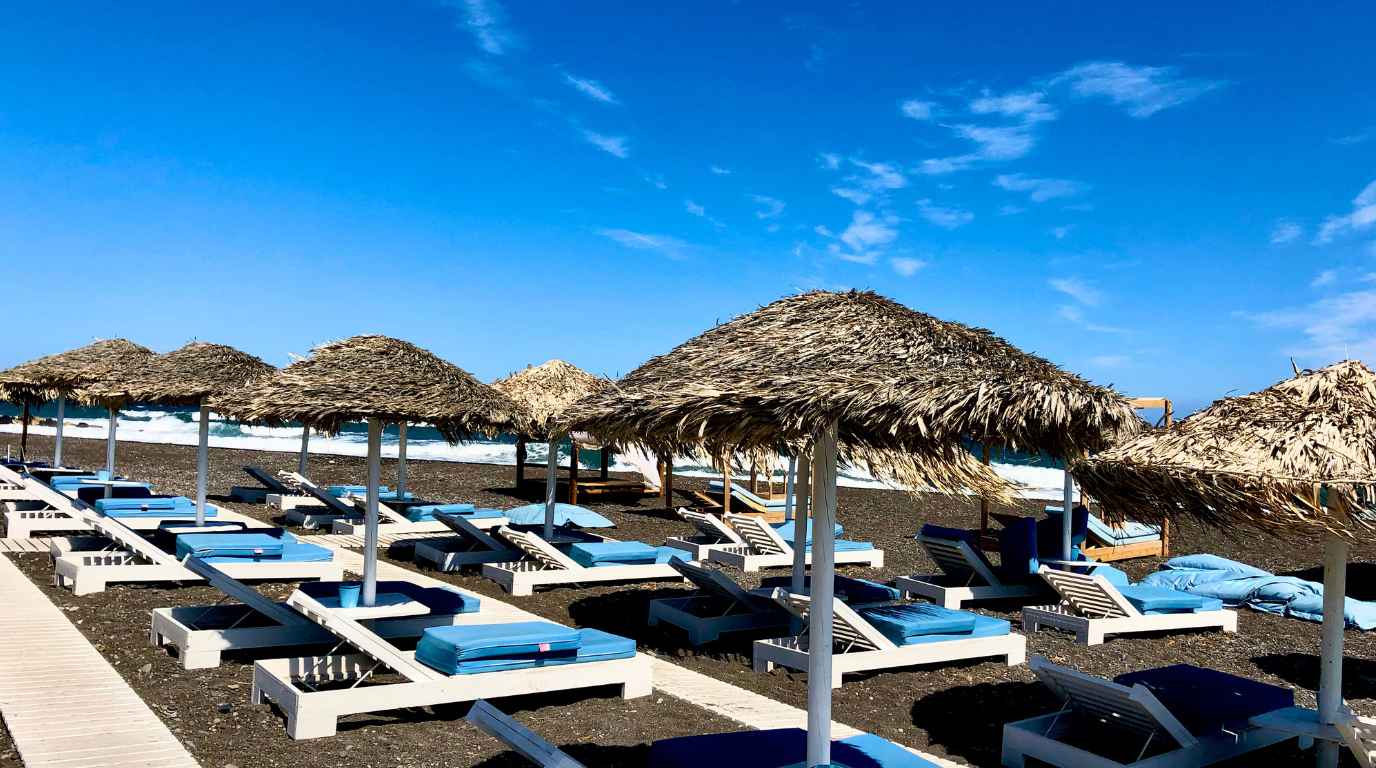
Perissa is the best known of the island’s black sand beaches and carries the most facilities. It sits on the southeastern coast, directly beneath the bulk of Mesa Vouno mountain.
The sand here is finer than Kamari’s and genuinely sandy rather than pebbled. The atmosphere is livelier, with a long run of beach bars, tavernas and sunbed rows.
Pick Perissa if you want a full beach day with everything within reach.
Perivolos
Perivolos continues south from Perissa, and together the two form the longest continuous stretch of dark sand on the island.
It is the same shoreline, but the crowd thins as you walk south. Perivolos tends to feel more relaxed than Perissa at the height of summer while keeping the same sand and much of the same infrastructure.
Kamari
Kamari sits on the opposite side of Mesa Vouno from Perissa, and the two are close in a straight line but not by road.
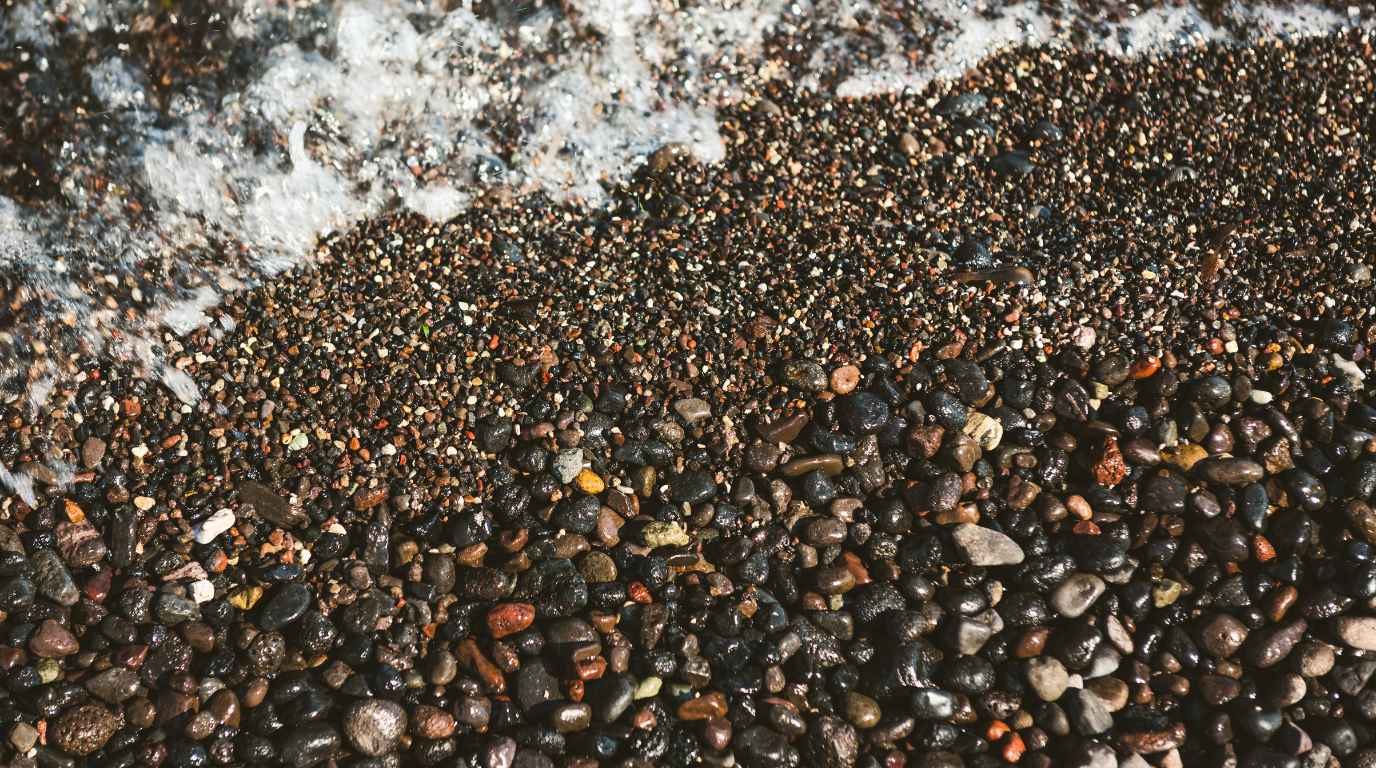
The key difference is texture. Kamari is smooth black pebbles rather than fine sand. It also has a tidier paved promenade and a quieter, more organised feel.
Water shoes help here. The pebbles are comfortable to lie on and less pleasant to walk across.
Vlychada
Vlychada is the most dramatic beach on the island, and it does not really look like a beach at all.
Grey volcanic sand runs beneath pale cliffs that wind and rain have carved into ridges, curves and hollows. People reach for the word lunar, and in this case it fits.
Vlychada also sits on the south coast, which makes it a useful fallback. On gusty days, when the wind makes the east coast uncomfortable, this side of the island is usually calmer. Our full guide to Vlychada beach covers the cliffs and how to visit.
Monolithos
Monolithos is the family choice. The water stays shallow and calm a long way out, the beach is organised, and it sits close to the airport.
If you are travelling with small children, this is the one to start with.
Exo Gialos
Exo Gialos, also known as Karterados Beach, lies downhill from Karterados village, about ten minutes from Karterados by car.
It is rockier than Perissa or Perivolos, with black sand and pebbles in a raw volcanic setting. It trades facilities for quiet, and in August that trade is worth considering.
For a closer look, read our full guide to Exo Gialos beach.
Which Black Sand Beach Should You Pick?
| Beach | Surface | Best for | Atmosphere |
|---|---|---|---|
| Perissa | Fine black sand | A full day with facilities | Lively |
| Perivolos | Fine black sand | The same sand, fewer people | Relaxed |
| Kamari | Smooth black pebbles | Promenade walks, dining | Organised, quieter |
| Vlychada | Grey sand under white cliffs | Scenery and photographs | Dramatic, calmer |
| Monolithos | Black sand, shallow water | Families with young children | Easy, low key |
| Exo Gialos | Black sand and pebbles | Quiet, close to Fira | Raw, undeveloped |
If you are deciding between the two biggest, our head to head on Kamari or Perissa goes deeper. For transfers and drive times, see getting around Santorini from Karterados.
The honest summary: Perissa for facilities, Perivolos for space, Kamari for the promenade, Vlychada for the view, Monolithos for children, Exo Gialos for quiet.
What Is Black Sand Actually Like to Walk On?
This is the part the photographs never convey, and it changes how you pack.
Black sand absorbs heat. Dark volcanic grains hold far more of the sun than pale sand does, and by midday in July and August the surface gets genuinely painful to cross barefoot.
Three practical habits solve most of it:
- Bring sandals or water shoes and keep them on until you reach your towel.
- Take a mat or a thicker towel. Heat comes up through a thin one.
- Rinse before you dress. Volcanic grains are coarse and cling to skin more stubbornly than fine white sand.
One more thing worth knowing: the water on these beaches often deepens quickly. Monolithos is the clear exception, which is exactly why it suits families.
How Do You Get to the Black Sand Beaches?
Santorini’s dark beaches sit on the opposite side of the island from the caldera villages, so nearly everyone drives, rides or takes the bus.
- By bus. Services run from the central station in Fira to Kamari, Perissa and Perivolos through the summer, and they are inexpensive.
- By car or ATV. The most flexible option, and the only practical way to reach Vlychada and the smaller coves.
- On foot. Perissa and Kamari sit either side of Mesa Vouno. The drive between them takes about 20 minutes around the mountain, or you can hike over the top past the ruins of Ancient Thera.
Staying inland shortens most of these journeys. From Karterados, which sits about 1.6 km from Fira and 3 km from the airport, Exo Gialos is roughly ten minutes away and Vlychada about fifteen.
When Is the Best Time to Go?
Early morning and late afternoon beat midday on every one of these beaches, for two reasons. The sand is cooler, and the crowds are thinner.
June and September give you warm water without peak-August pressure on sunbeds and parking. In July and August, arrive before 10am if you want a front row and a parking space.
Check the wind before you commit. When the meltemi blows, the east coast beaches take the brunt of it, and Vlychada or the south coast will be the calmer choice.

The Takeaway
Santorini’s black sand is not a novelty. It is the clearest evidence you can stand on that this island is a volcano, ground down by the sea into something you can walk across.
Choose by what you actually want from the day. Perissa and Perivolos for a classic sandy beach day, Kamari for a polished promenade, Vlychada for scenery you will not see anywhere else, Monolithos for calm shallow water, and Exo Gialos when you want the volcanic coast without the crowds.
Whichever you pick, bring shoes for the sand. It is hotter than it looks.
Planning a trip around the island’s beaches? A quiet village base keeps you close to all of them. See our guide to the beaches of Santorini and our suites in Karterados.
Stay between the beaches
Make Karterados your base for Santorini’s black sand coast
Our suites sit 1.6 km from Fira, about ten minutes from Exo Gialos and fifteen from Vlychada, so every beach in this guide is an easy drive away. Spend the day on the sand and come back to a quiet village in the evening.
Frequently Asked Questions
Why is the sand black in Santorini?
The sand is black because it is ground-up volcanic rock. Santorini is an active volcano, and eruptions covered the island in dark basalt. The sea has been eroding that rock into coarse dark grains and pebbles ever since.
Does Santorini have black sand beaches?
Yes. Santorini has several, including Perissa, Perivolos, Kamari, Vlychada, Monolithos and Exo Gialos. They all sit on the south and east coasts of the island.
Are all beaches in Santorini black sand?
No. The caldera side of the island is cliff rather than beach, and Red Beach near Akrotiri is rust-red from iron-rich rock. Some dark beaches are also pebbled rather than sandy, Kamari being the clearest example.
Which is the best black sand beach in Santorini?
It depends on the day you want. Perissa has the most facilities, Perivolos has more space, Kamari has the best promenade, Vlychada has the most dramatic scenery, Monolithos suits families, and Exo Gialos is the quietest.
Where is the black sand beach in Santorini?
The main black sand beaches lie on the southern and eastern coasts. Perissa, Perivolos and Kamari sit around Mesa Vouno mountain in the southeast, Vlychada is on the south coast, and Exo Gialos sits below Karterados on the east.
Is the black sand hot to walk on?
Yes. Dark volcanic sand absorbs more heat than pale sand, and by midday in summer it becomes uncomfortable to cross barefoot. Bring sandals or water shoes.
Can you swim at Santorini’s black sand beaches?
Yes. The water is clear and swimmable at all of them. It tends to deepen quickly, so Monolithos is the usual choice for families with young children because the shallows extend further out.